
Denormalising Collapse
Vitoria-Gasteiz, Spain | 18-22 May 2026

Collapse is no longer an abstraction. It has taken root in every facet of contemporary life: from the intimacy of our daily lives and how we eat, move, feel and build social bonds, to the entrenched mechanisms of oppression and control that govern the global order. Against a backdrop of rampant civic disillusionment and in the face of a deliberately fragmented society, it is intolerable that our narratives continue to shift the blame and individualise it among ordinary people. The reality is that an ever-shrinking minority holds the reins of our models of material production and existential meanings. The greatest threat of this situation lies in how easily it is accepted: the more the ethical and ecological principles that bind us together deteriorate, the more the disaster becomes the norm. Denormalising the collapse is, therefore, today the first essential step towards regaining our agency.
The complexity of such a challenge compels us to break with the boundaries of hegemonic thought, weaving networks of action and dialogue capable of transcending what divides us and defending what unites us: ensuring a just future for all humanity. Convergence Zone seeks to contribute to weaving these networks, consolidating a programme of reflection, coexistence and encounter, rooted locally yet with an international reach. This space is aimed at intellectuals, artists, activists and researchers from around the world who share a history of commitment and a vision for change.
This residency consists of a week of morning sessions at the Villa Suso Palace, featuring international residents alongside prominent local and national experts. In the afternoons, participants attended local projects and cultural events of interest, including an official reception hosted by the Mayor, Maider Etxebarría, and special visits to the Guernica Peace Museum, the MartinExtea shelter for repressed activists run by the Mundubat organisation, and the Vitoria-Gasteiz Open School of Citizenship (HEI).
Participants
International Resident

David Vine
David Vine is an American political anthropologist, professor and essayist. Author of Island of Shame, Base Nation and The United States of War, he has dedicated his career to exposing the social and ecological costs of United States military power. He regularly collaborates with the Costs of War Project at Brown University.

Érika Campelo
Érika Campelo is a Franco-Brazilian political scientist, journalist and activist. With an extensive background in the media and civil society, she serves as the national representative for VoxPublic, a support network for associations and collectives seeking to influence French public policy in order to combat social injustice.

Fayez Hamad
Fayez Hamad is a Palestinian architect and community leader who addresses issues of global justice and interregional dialogue. He currently works as the digital strategy manager at DEKRA and as the regional coordinator for Europe at the Al Sharq Forum. He is the founder of the Hungarian Palestinian Movement and of BDS in Hungary.

Jean Wyllys
Jean Wyllys is a renowned Brazilian politician, lecturer, artist and public figure. An academic expert on disinformation and media theory, and a former federal congressman for São Paulo, he spent years in exile due to harassment and death threats from the Brazilian far-right. He is standing for election once again this year, in 2026.

Julia Grosinger
Julia Grosinger is an Austrian-born anthropologist and academic specialising in socio-ecological relations and regional development. She is currently a postdoctoral researcher at the Autonomous University of Barcelona, and her work explores landscape governance and paradigms beyond economic growth.

Macarena Bonhomme
Macarena Bonhomme holds a PhD in sociology and is a lecturer at the Andrés Bello University in Chile, as well as a researcher at the NUVIV Millennium Nucleus and the NUDOS Centre. Her work explores the intersections of migration, coexistence and racialisation from a transnational perspective, using an intersectional and decolonial approach.

Zaid Jaloudi
Zaid Jaloudi is a Palestinian-American economist and activist, and president of the Global Student Network for Palestine (GSPN). He has been one of the main organisers of encampments and protests at universities across the US and Europe since 2024, facing campaigns of harassment, academic persecution and retaliation.

Adrián Almazá
Adrián Almazán is a professor at Carlos III University, holds a PhD in philosophy and is the coordinator of the THECO (Technology and Ecological Humanities) research group. He is the author of Nuevos comunalismos and Decrecimiento: del qué al cómo, among other works.
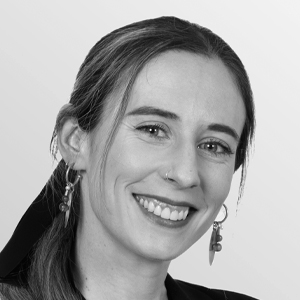
Amaia García
Amaia García holds a PhD in Social Work (EHU/UPV) and is a specialist in gender-based violence, disability, social services and citizen participation. She is a member of the steering group for the Open School of Citizenship (HEI, Vitoria-Gasteiz).

Andrés Lomeña
Andrés Lomeña is a teacher, author and journalist and holds a PhD in sociology. His most recent publications include Ficcionología (2016), El Periodista de Partículas (2017) and Rescoldos Mentales (2018). He writes regularly for The Huffington Post.
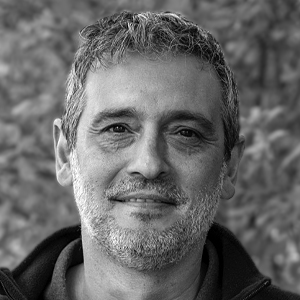
David González
David González is a consultant in agroecology and biofertility, holds a degree in Chemistry and is the co-founder of Sustraiak Habitat Design, where he designs regenerative agriculture and ecosystem restoration projects.

Íñigo Antepara
Íñigo Antepara is the head of ecosocial affairs for the ESK trade union and is part of the Department of Applied Economics at the UPV/EHU University, where his work focuses on energy economics and public policies tackling energy poverty.

Joxean Fernández
Joxean Fernández is an aid worker, lawyer, economist and political scientist with extensive experience in urban and social development and public spaces. He is a member of CEFIR and the Pandora collective, which focuses on technology for the common good.
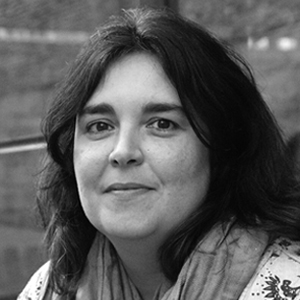
Maider Maraña
Maider Maraña, director of the Baketik Foundation, is an expert in human rights, heritage, non-discrimination and conflict resolution, with a long career advising international organisations such as UNESCO, the EU and Mercosur.

Martín Lallana
Martín Lallana is the head of ecosocial affairs for the LAB trade union. He holds a degree in Industrial Engineering and a Master’s in Renewable Energies, and has worked as a researcher in industrial ecology, sustainable mining and eco-syndicalism.

Rafael Heiber
Rafael Heiber is the co-founder and vice-president of the Common Action Forum. Also a Sociology Professor at Carlos III University, he focuses his work on the strategic coordination of advocacy, political dialogue, and international networks.
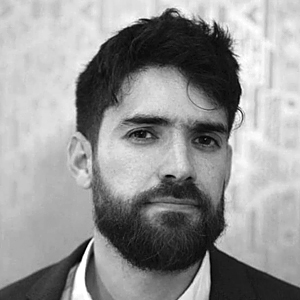
Tristán Torrejón
Tristán Torrejón is Program Manager at the Common Action Forum. His work focuses on designing and coordinating international initiatives that connect public policy analysis, civil society and political advocacy.
