Post-Gaza Politics: A Prelude for a Global Solidarity
Madrid, Spain | 28 November 2025
OCTAGON 2025 Report.pdf
download here + or browse it clicking the image
It comes as no surprise that the Gaza genocide has irreversibly redefined multilevel political dynamics, exposing the true colours of a wide array of actors to the eyes of the world’s majorities. By embodying the perverse byproducts of multilateral disengagement, imperialism, extractivism, militarism and supremacist statesmaking, the broader Palestinian issue had always sat at the source of the global order’s cascading shortcomings. At a time when distraction and immobility hinder the collective tackling of existential issues, this crisis puts names and faces to victims, perpetrators, and facilitators alike. As the cynically selective application of the ceasefire has evidenced, the genocide is far from over, and allowing the world to indulge in yet another false solution will now risk much more than postponing bloodshed.
Since 2021, the Octagon has dedicated its annual editions and efforts to analysing avenues for change in Israel-Palestine, gazing onto the ground, the region, and a global community of nations and ideas. In this context, the growing crackdown on pro-Palestinian activists throughout the world sublimates a broader global turn toward authoritarianism and the prosecution of civil advocacy and dissent. This urgently calls for additional spaces for coordination, networking, knowledge sharing, and support among defenders. In its bid to reinvent itself, the global community will face the challenge of both protecting and promoting civil action as a guarantor of justice. One that will define our shared destinies as much as our shared humanity.
This edition examines the evolving tensions between Palestinian liberation and its pivotal role in a broader transformation toward justice-centred politics, inclusive leadership models, and alternative multilateral structures that serve humanity’s common aspirations.
1st SESSION
The Rebirth of the Palestinian Narrative
read more +
The traditional discourse of Palestinian liberation—centred on statehood, territorial sovereignty, and diplomatic recognition—has proven unfit for the magnitude of the current juncture. The Gaza genocide has revealed the necessity of fundamentally reimagining how Palestinian struggle connects to universal experiences of oppression and resistance. This transformation requires moving beyond victimhood-centred narratives toward a unifying justice framework that positions Palestine as integral to global movements for decolonisation, climate justice, and human dignity.
The collapse of Israeli Hasbara and Western media dominance has created unprecedented space for Palestinian voices to reshape their own story. This narrative renaissance slowly seems to transcend a narrow nationalism to embrace a vision of liberation that resonates across movements and continents, linking the defence of Palestinian land to worldwide struggles of indigenous sovereignty, connecting the woes of Gaza’s siege to climate-induced threats, and positioning resistance to settler-colonialist forces as essential to humanity’s future.
From the Genocide to the Dawn of a New Leadership
read more +
Emerging leadership models must transcend the factional divisions that have paralysed Palestinian politics for decades, and the forces bidding for their fragmentation. The global solidarity movement has illustrated how Palestinian liberation resonates most powerfully when articulated by diverse voices—from young organisers in refugee camps to diaspora intellectuals, from indigenous activists to climate justice advocates. This distributed moral leadership model suggests pathways toward more democratic, inclusive, and globally connected forms of Palestinian political organisation, but it leaves open questions about the vulnerabilities of digital tutelage and the implications of a potential future transition to traditional structures.
Who Defends the Defenders?
read more +
This unprecedented assault on defenders requires urgent coordination, networking, and mutual protection among global justice movements. The growing repression signals not just an attack on Palestinian solidarity but a broader offensive against all forms of dissent that challenge imperial power structures. As traditional legal protections erode and institutional channels prove insufficient, building alternative networks of support and security becomes essential for the survival and effectiveness of liberation movements.
Shifting the Multilateral Architecture
read more +
The emergence of alternative centres of legitimacy—from Global South institutions to digital spaces, from citizen movements to indigenous confederations—offers pathways for the same drive behind Palestinian liberation to push for a truly democratic multilateral system. In this bid for transformation, the world will need to move away from the trap of reformism and dare to create entirely new frameworks for global cooperation based on justice, equality, and collective security.
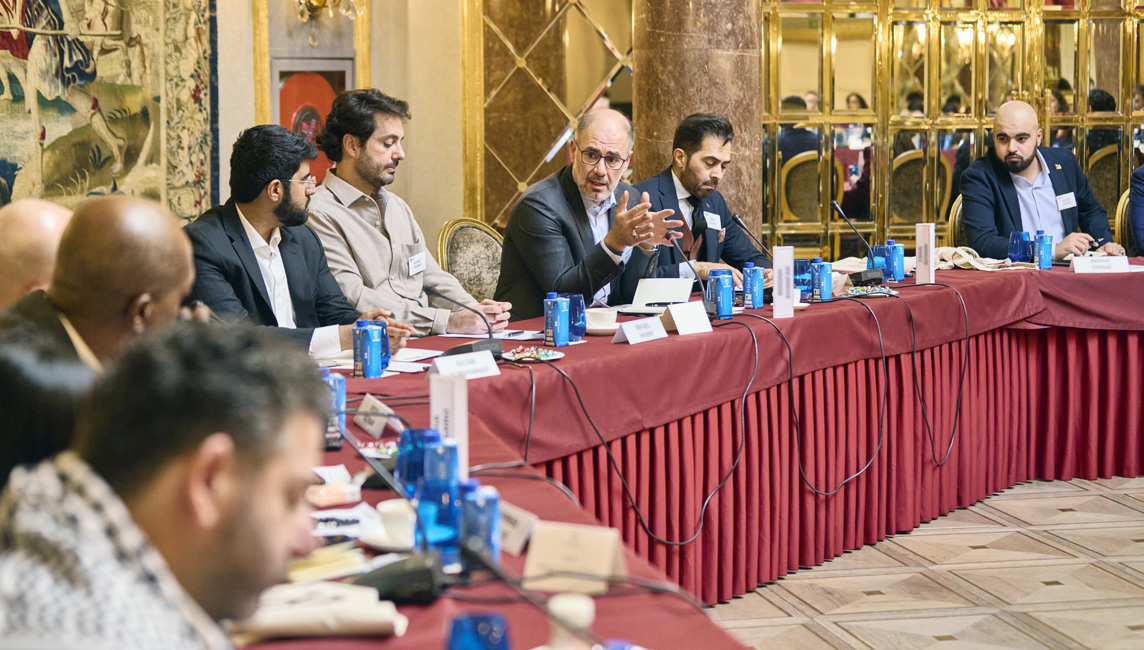
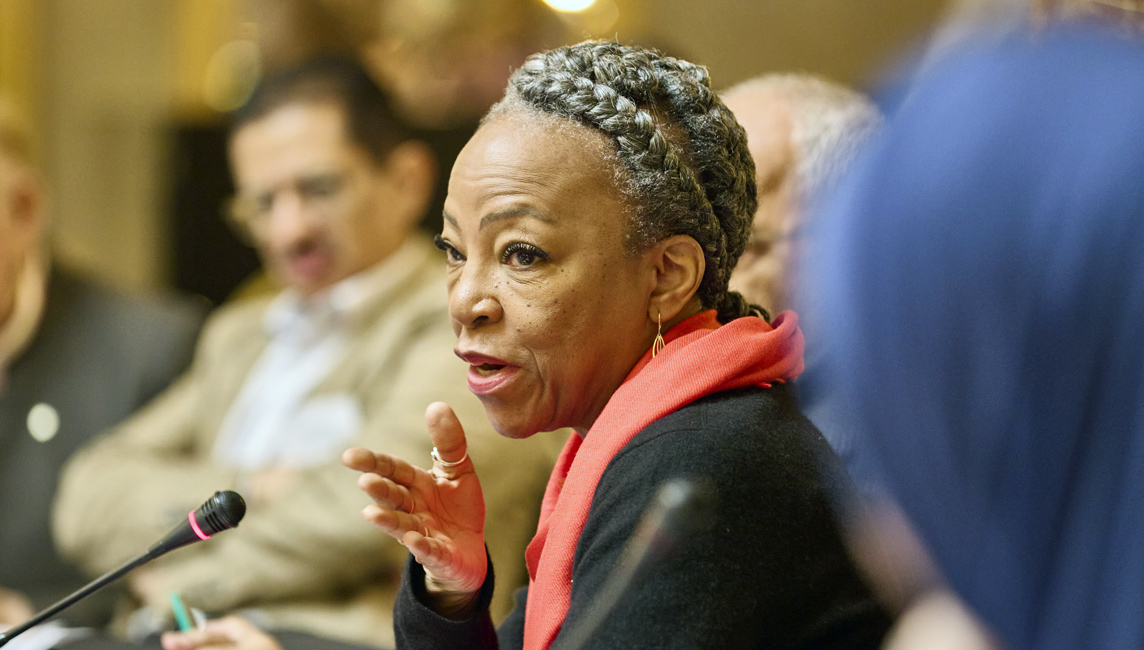
Photo gallery OCTAGON 2025