Common Action Forum 2024
Sovereignty and Fair Interdependence: The Global South and the Democratisation of Prosperity
Kuala Lumpur, Malaysia | 02-03 December 2024
Four Seasons Hotel Kuala Lumpur
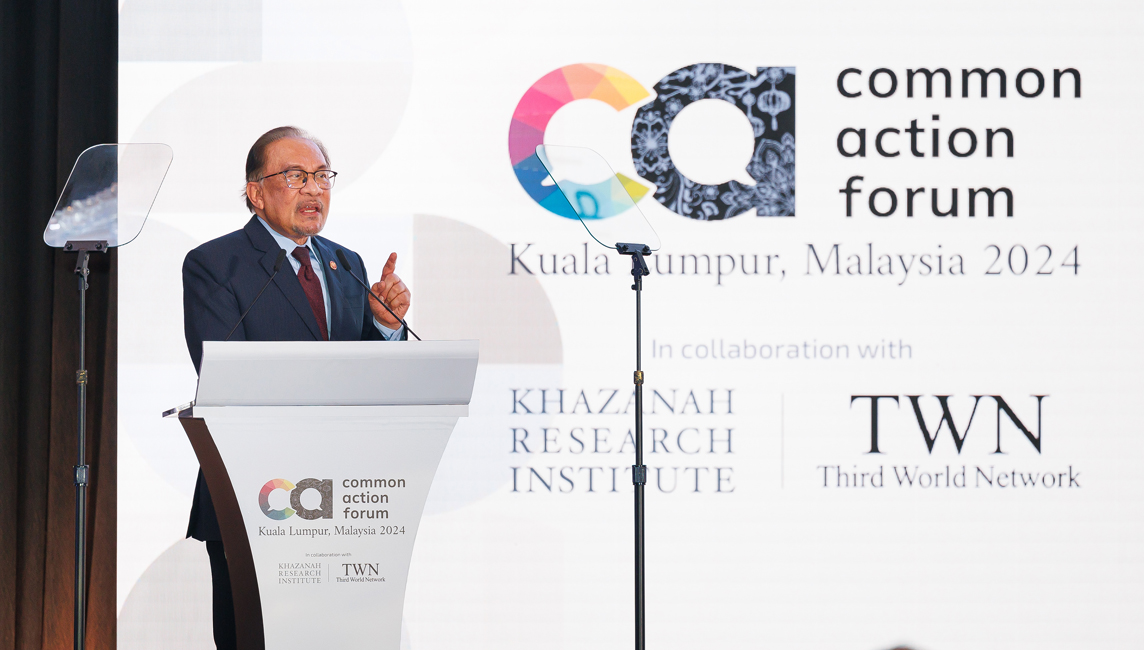
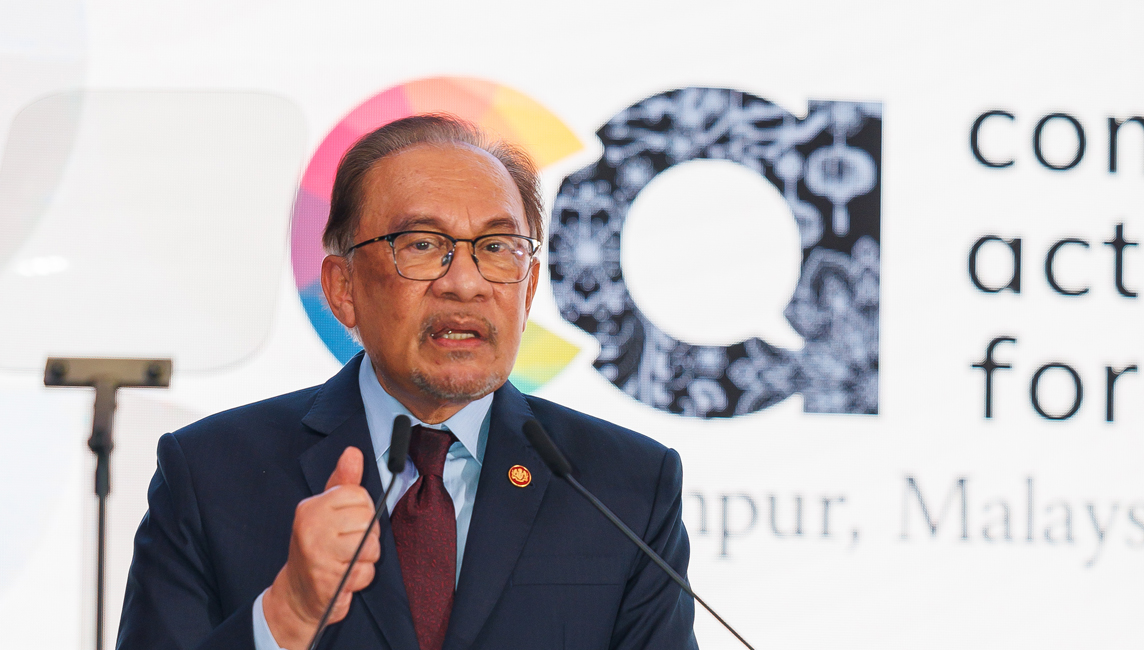
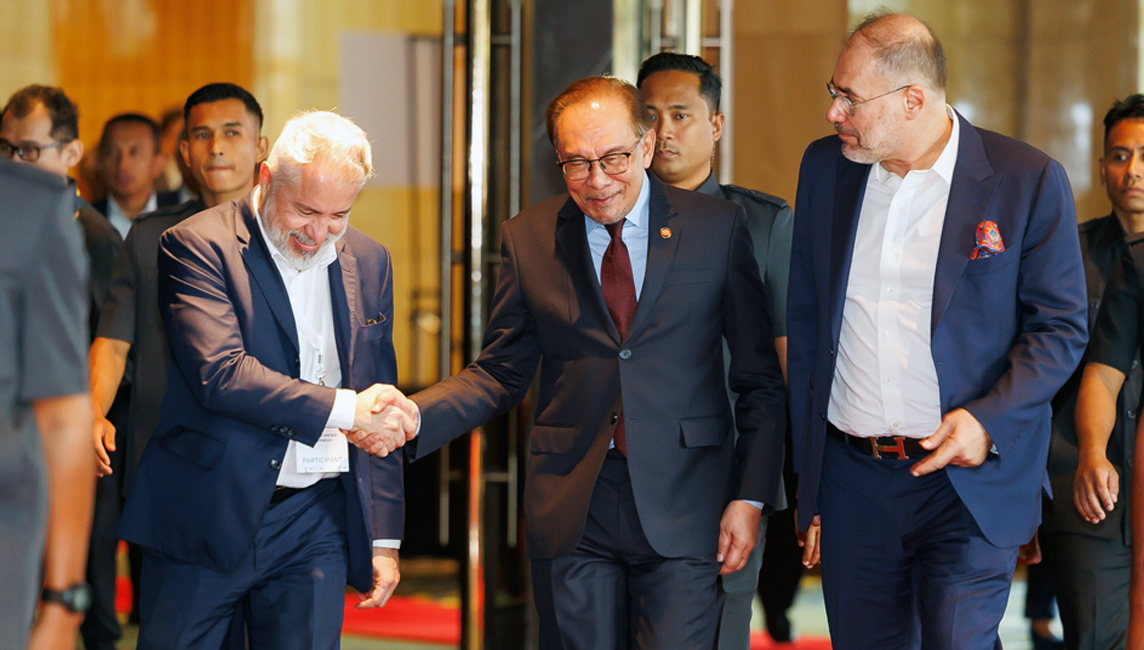
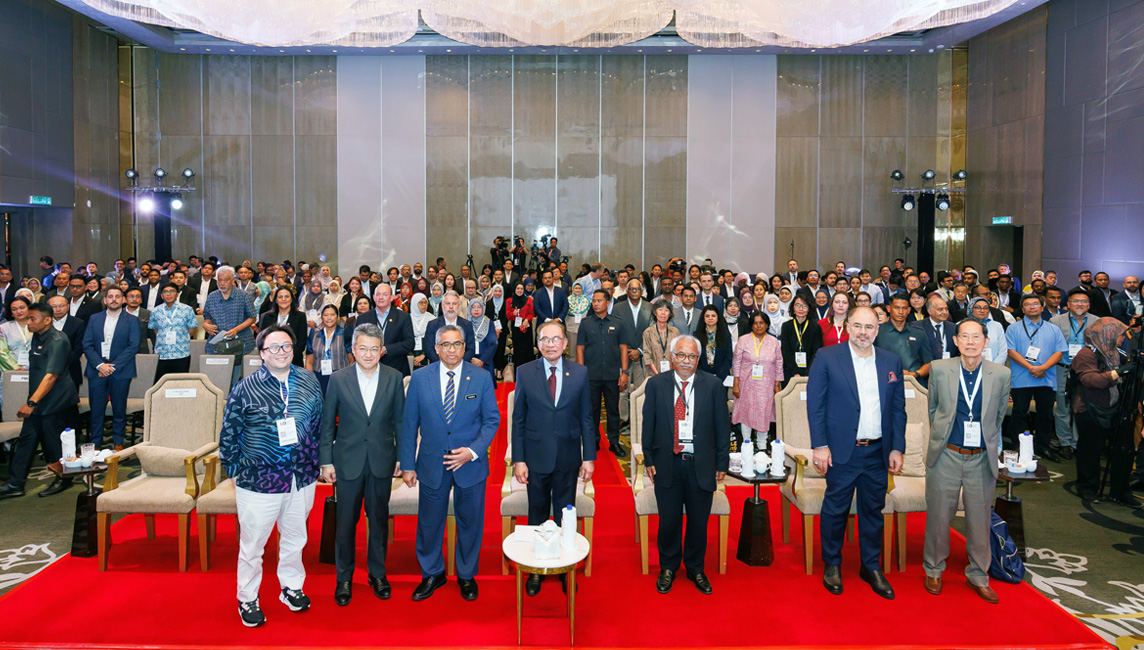
With the participation of his excellency Prime Minister Anwar Ibrahim.
download here + or browse it clicking the image
We stand at a critical juncture in human history. The 21st century has ushered in an era of unprecedented change, marked by technological revolutions, economic upheavals, and ecological reckonings. Upon a shared horizon of further overlapping crises, this tumultuous period has not only reshaped our world but also exposed the many inadequacies and paradoxes of our long-standing systems. Unprecedented wealth creation coexists with widening inequality; technological marvels connect billions yet simultaneously isolate and divide us; and growing consensus on global challenges is met with either cynical, profit-driven solutions or withdrawal into nationalism and protectionism. Geopolitical and domestic tensions now jeopardise the stability required for the most routine of international transactions, let alone economic cooperation and interdependence. Still, more than ever before, the tools for solving our most pressing problems are at hand, even while coordinated action remains elusive.
read more +
Rather than hinting at an alternative to globalisation, new forms of cooperation need to rethink globalisation under a genuine, cross-cutting balance of power. The challenges ahead demand determination and creativity to reshape and build investment, distribution, cooperation, and sustainability mechanisms. In pushing beyond incremental changes and surface-level reforms, the Global South emerges not merely as a key balancing element of the global stage but as a potential architect of an equitable international order: home to the majority of the world’s population and a wellspring of innovation, social dynamism and resilience, it is uniquely positioned to lead this transformation, offering fresh perspectives on age-old problems.
From international finance and industrial policy to regulatory and cooperation frameworks, we will be challenged to rethink how our nations interact, how our resources are allocated, and how we define progress and prosperity. Our decisions and actions in the coming years will shape the trajectory of human civilisation for generations.
OPENING REMARKS
Monday, 02.12.2024 | 09.30 hs
Wadah Khanfar, Chairman and Co-founder, Common Action Forum
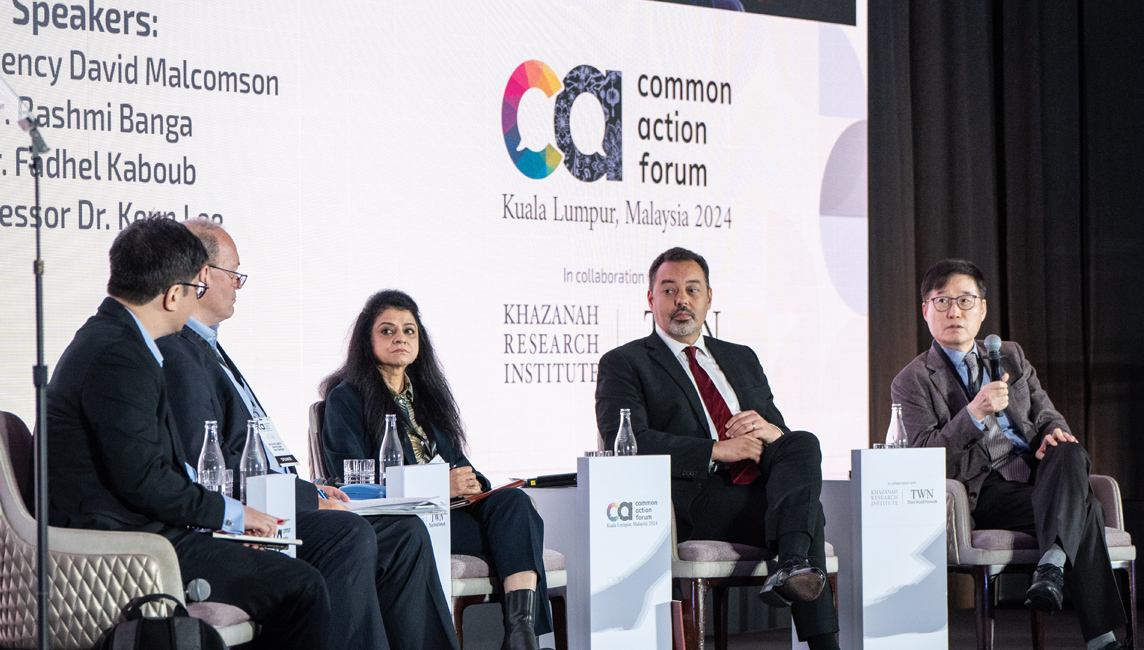
The Emergence of a New Development Order
Monday, 02.12.2024 | 9:40 hs
YB Tuan Liew Chin Tong, Deputy Minister of Investment, Trade and Industry of Malaysia
Moderator:
Yin Shao Loong, Deputy Director of Research at Khazanah Research Institute
Speakers:
Keun Lee – Fadhel Kaboub – David Malcomson – Rashmi Banga
read more +
The legitimacy of the “rules-based international system”, built on asymmetric relationships and vested interests, now cracks under persistent inequality, accelerating environmental degradation, and pervasive disillusionment. To counter these trends and forge a more just world, it is upon humanity to fully reimagine global partnerships and governance structures. Central to this vision is the empowerment of developing countries, the overwhelming majority of our world, to lead global decision-making. This will demand innovative forms of South-South cooperation that transcend traditional economic arrangements, facilitating the exchange of knowledge, technology, and context-specific solutions. Simultaneously, this shift must also compel us to reimagine North-South relations, creating frameworks capable of redressing historical injustices and fostering genuine solidarity.
In search of this values-based global system for the 21st century, emerging initiatives like BRICS+ offer potential models. Still, to be truly transformative, they must avoid replicating the ungovernability and exclusionary practices of existing institutions and rivalries. Indeed, realising this vision demands bold leadership and unwavering political will to challenge entrenched interests, reimagine global power dynamics, and commit to long-term, collaborative solutions. But only through such a fundamental reimagining can we hope to build a world order that serves all of humanity and safeguards our shared future.
·The call for a new international economic order echoes across five decades. What fundamental shifts in global power dynamics, economic structures, or ideological frameworks have occurred since the 1970s that might make such a transformation more feasible—or more challenging—today?
·Given the increasing complexity of the global economy and its challenges, how might we understand economic development in the 21st century? How would a new development paradigm incorporate models of industrialisation and economic catch-up?
2nd SESSION
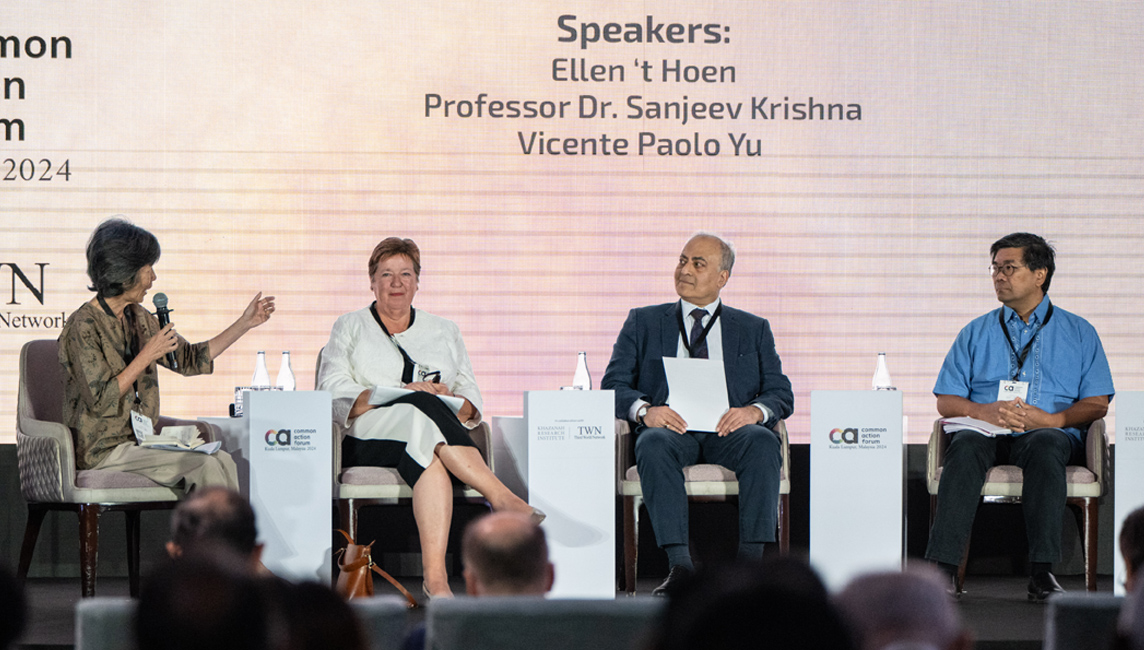
Fixing Global Inequality through Climate and Health Justice
Monday, 02.12.2024 | 11:30 hs
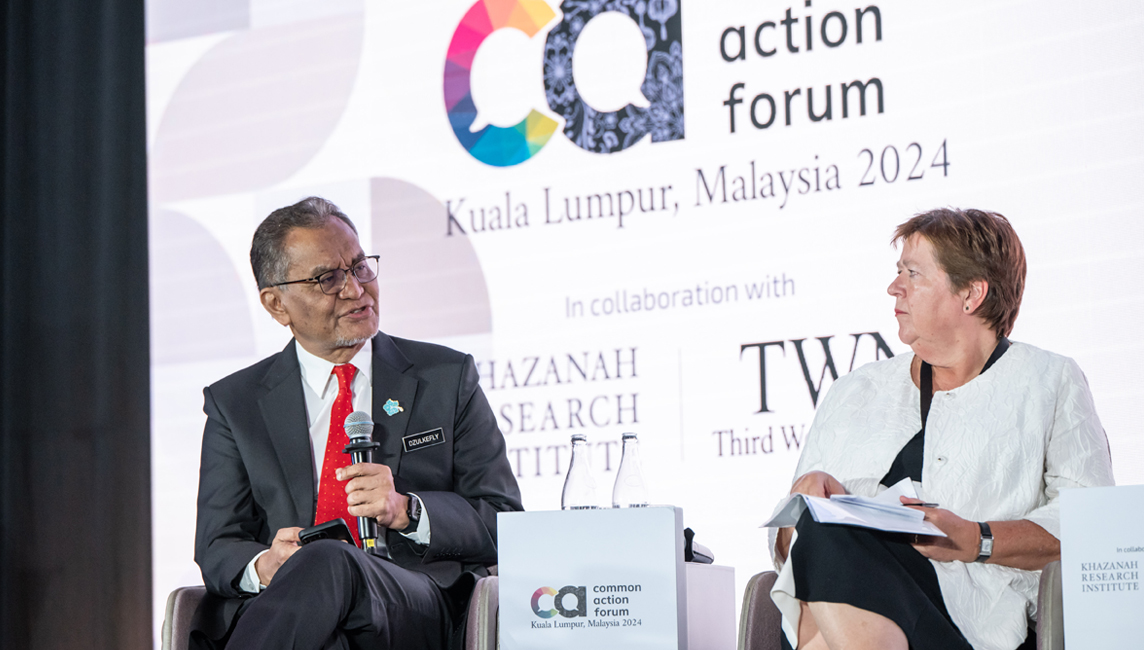
YB Datuk Seri Dr Hj Dzulkefly Ahmad, Minister of Health of Malaysia
Moderator:
Chee Yoke Ling, Executive Director of Third World Network
Speakers:
Sanjeev Krishna – Ellen ‘t Hoen – Vicente Yu
read more +
In an era of rapid progress, the technological landscape is scarred by a deepening chasm between developed and developing nations. This disparity imperils not just economic progress but our collective ability to confront mounting global crises, and yet it is no accident of history. It is the outcome of a system that predates the independence of most Global South nations, one designed to perpetuate dependency and reinforce existing power structures.
Often trapped at the low-skill end of global value chains, plagued by brain drains, and starved of large-scale finance, most developing nations remain on the periphery of innovation. Multinational corporations (MNCs) dominate global supply networks, further entrenching this marginalisation. Intellectual property (IP) regimes, ostensibly designed to foster innovation, often serve as barriers to technology diffusion in the Global South (and thus to innovation itself). Developing nations are ensnared in a vicious cycle, unable to build skilled workforces or develop manufacturing capacity, let alone invest in crucial R&D. The irony is that while the Global South bears the brunt of overlapping crises—from pandemics to climate change—it remains largely excluded from producing the essential technologies needed to address them. This hampers their abilities to tackle existential crises and deprives the world of their innovative potential.
Only by bridging this technological divide can we hope to build a world where all nations are equipped to face shared challenges and contribute to our collective prosperity. Prioritising diffusion and local adaptation by overhauling IP regimes and creating new financing models that can bring in long-term, large-scale investment are some of the crucial reforms of a broader paradigm shift that must aspire to democratise global supply chains. The path forward asks us to reimagine how we create, plan, produce and share in a genuinely global context. Ensuring equitable access and diversifying the production of essential technologies isn’t just crucial to balancing the sharing of risks and benefits but also to unlocking the indispensable, innovative potential of the Global South.
·How can international rules be restructured to facilitate proactive technology transfer to developing countries, particularly in critical sectors? What specific provisions or mechanisms need to be reformed or introduced?
·How can developing nations create effective technology roadmaps or industrial policies that help realise national priorities in health, climate & else? What role should international organisations and cooperation play in supporting the development and implementation of these strategies?
Monday, 02.12.2024 | 14.30 hs
Nungsari Ahmad Radhi, Chairman, Khazanah Research Institute
Sovereignty and Fair Interdependence: The Global South and the Democratisation of Prosperity
Monday, 02.12.2024 | 14:35 hs
YAB Dato’ Seri Anwar Ibrahim, Prime Minister of Malaysia
3rd SESSION
Challenges of a Post-Growth Financial Architecture
Monday, 02.12.2024 | 15:30 hs
Jomo Kwame Sundaram, Research Advisor, Khazanah Research Institute
Moderator:
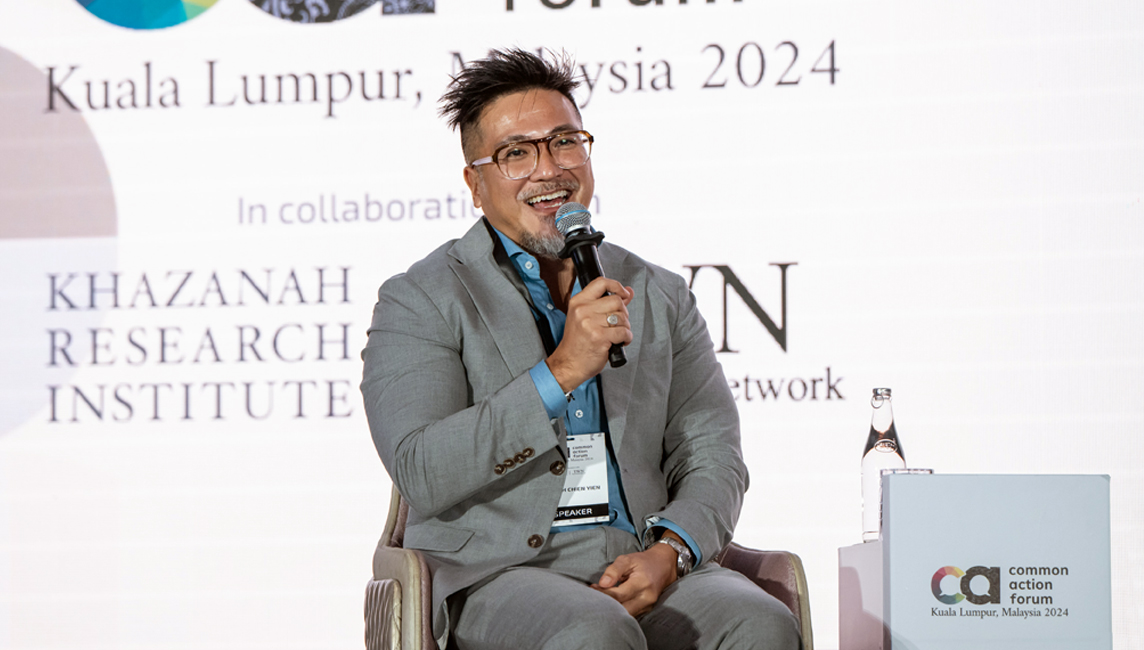
Goh Chien Yen, Consultant on Finance and Development, Third World Network
Speakers:
Richard Kozul-Wright – Andrés Arauz – Attiya Waris – Bhumika Muchhala
read more +
The international financial system is at a crossroads and ill-equipped to address the world’s complex challenges. As climate change accelerates and inequality deepens, this stale architecture buckles under the weight of global crises. A staggering 3.3 billion people—nearly half of humanity—live in countries where debt servicing trumps vital investments in health and education, stifling human development and hobbling efforts to combat climate emergencies.
This system’s inadequacy is further exposed by the ballooning SDG financing gap, which has exploded from $2.5 trillion in 2015 to a crippling $4 trillion today. This chasm between ambition and reality lays bare the fundamental inability of current financial mechanisms to channel resources where they are desperately needed, perpetuating a vicious cycle of debt, underdevelopment, and vulnerability that disproportionately impacts the Global South and has, nonetheless, global ramifications.
Several critical reforms are urgently needed to break this cycle and forge a financial architecture fit for the 21st century. From building a proper multilateral framework for debt restructuring to the dramatic increase of development banks’ lending capacity and the coordinated prosecution of illicit financial flows, even to the overhauling of governance quotas in financial institutions to amplify the voices of the Global South, these reforms represent a bold reimagining of the international financial architecture as a whole. And while implementation challenges loom large, the cost of inaction is far greater. Only through such systemic transformation can we hope to create a financial system that truly serves all nations and paves the way for a more equitable, sustainable future.
·How can we critically evaluate the various international initiatives to reform the international financial architecture including the creation of sovereign debt restructuring mechanisms (SDRMs),and delivering a framework for national debt relief and restructuring that balances creditor and debtor interests?
·In addition to South-South initiatives, what priorities should the developing countries bring forth in the UN Fourth International Conference on Financing for Development (2025) in reforming the international financial architecture in order to enhance SDG outcomes?
CLOSING REMARKS
Monday, 02.12.2024 | 17:00 hs
Rafael Heiber, Common Action Forum
Yin Shao Loong, Khazanah Research Institute
Chee Yoke Ling, Third World Network
Tuesday, 03.12.2024
Workshop sessions provide a private space for more focused interaction between experts and smaller groups of participants around the themes and issues raised in the plenary sessions of day one.
They will organised around four topics, each with its respective guiding questions. All four workshops will be conducted under the Chatham House Rule to encourage open dialogue. Invited experts and facilitators will outline issues around the proposed themes, enabling a conversation dynamised by the latter.

Participants

Wadah Khanfar
WELCOME REMARKS
Wadah Khanfar, co-founder and Chairman of the Common Action Forum is a leading voice in global media and policy innovation. As the former Director General of Al Jazeera Network, he transformed the organisation into one of the world’s most influential media outlets. Under his leadership, the Common Action Forum has emerged as a vital platform connecting Global South perspectives, hosting ground-breaking dialogues between policymakers, intellectuals, and civil society leaders from over 40 countries.

YAB Dato’ Seri Anwar Ibrahim
MAIN KEYNOTE
YAB Dato’ Seri Anwar Ibrahim is Malaysia’s 10th Prime Minister, leading the country’s first unity government since November 2022. A long-time advocate for democratic reform and good governance in the Global South, he champions inclusive economic policies through his “MADANI Economy” framework. A prominent voice in South-South cooperation, Anwar Ibrahim combines his deep understanding of Islamic and Western traditions to advocate for a more equitable global order.

Nungsari Ahmad Radhi
WELCOME REMARKS
Dr Nungsari Ahmad Radhi is the Chairman of the Khazanah Research Institute (KRI). An economist, he is Chairman of Malaysia Airports Holdings Berhad and a board member of Bank Negara Malaysia, among other banks. He is a member of the Finance Minister’s Advisory Committee, the Prime Minister’s Policy Advisory Committee, and the National Economic Action Council. He has been an academic, parliamentarian and consultant, as well as a director and board member of several companies incorporated in the Ministry of Finance.

Dzulkefly Ahmad
2nd SESSION – KEYNOTE
H.E. Dr Dzulkefly Ahmad serves as Malaysia’s Health Minister. This is his second term in this role, having previously held the position from 2018-2020. A toxicologist with a PhD from Imperial College London, he brings scientific expertise to public service. His current priorities include healthcare digitisation, implementing electronic medical records, and health financing reforms. He leads Malaysia’s efforts to modernise the nation’s healthcare infrastructure.

YB Tuan Liew Chin Tong
1st SESSION – KEYNOTE
YB Tuan Liew Chin Tong is Malaysia’s Deputy Minister of Investment, Trade and Industry (MITI) since December 2022. He previously served as Deputy Defence Minister (2018-2020), Executive Director of Penang Institute (2009-2012), and Executive Director of Research for Social Advancement (REFSA) (2007–2011). Within MITI, he has spearheaded industrial policy and semiconductor strategy.

Jomo Kwame Sundaram
3rd SESSION – KEYNOTE
Jomo Kwame Sundaram is a Research Adviser at KRI. He was Professor at the University of Malaya, Founder of the International Institute for International Development (IDEA), UN Under-Secretary-General for Economic Development, Research Coordinator of the G24 Group on International Monetary Affairs and Development and Assistant Director-General for Economic and Social Development at FAO. He was awarded the Wassily Leonti Prize for his contribution to advancing economic thought.

Yin Shao Loong
1st SESSION – MODERATOR
& CLOSING SESSION
Yin Shao Loong is the Deputy Director of Research at Khazanah Research Institute (KRI). He focuses on industrial policy, climate change, and future technologies. He spent a decade working in federal and state government and another decade in civil society and academia.
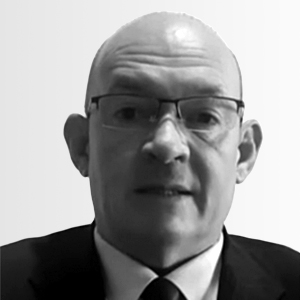
David Malcomson
1st SESSION – SPEAKER
H.E. Mr David Evan Malcomson currently serves as High Commissioner of South Africa to Malaysia. Among other contributions to South African diplomacy, he served as Minister Plenipotentiary at the South African Embassy in Beijing and Director and Chief Director of the NEPAD. He was also Sous-Sherpa for the BRICS, the IBSA, and the Indian Ocean Rim Association (IORA).

Fadhel Kaboub
1st SESSION – SPEAKER
Dr Fadhel Kaboub is President of the Global Institute for Sustainable Prosperity and an Associate Professor of economics at Denison University. He is a member of the Independent Expert Group on Just Transition and Development, among other initiatives. His work has focused on designing public policies to enhance monetary and economic sovereignty and resilience in the Global South.
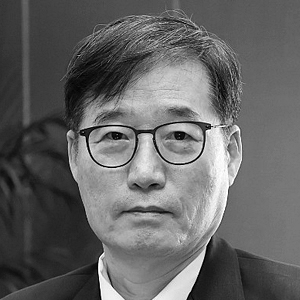
Keun Lee
1st SESSION – SPEAKER
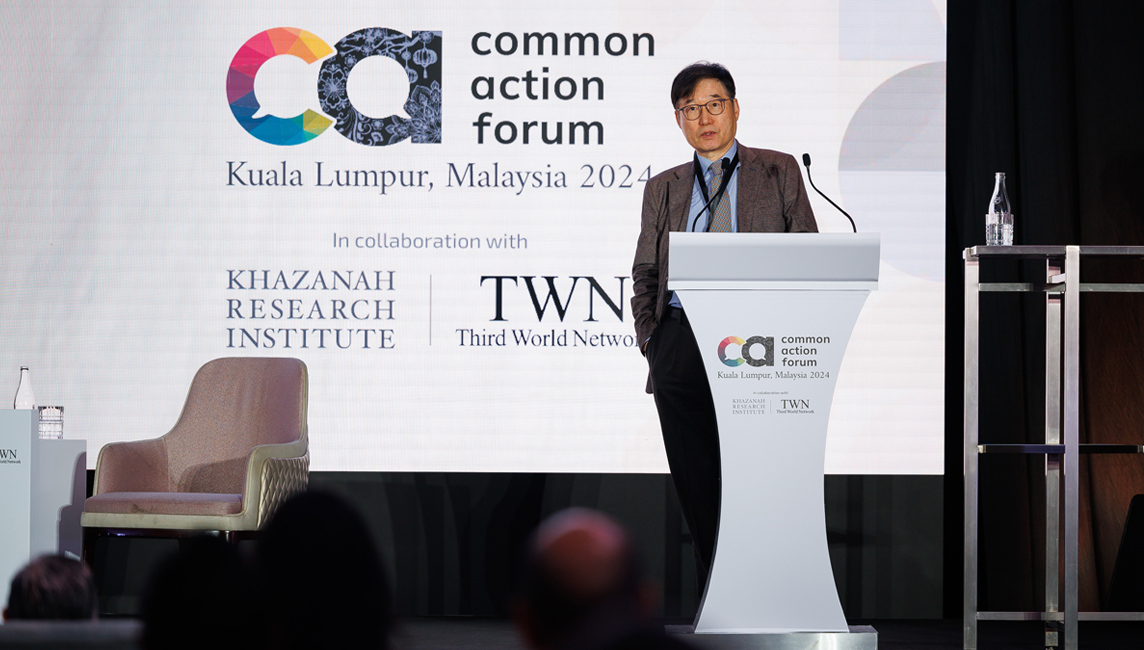
Dr Keun Lee, a former vice chair of the National Economic Advisory Council for the President of South Korea, is a Distinguished Professor of Economics at Seoul National University (SNU), a fellow at CIFAR, an editor at Research Policy, and the author, most recently, of Innovation-Development Detours for Latecomers: Managing Global-Local Interfaces in the De-Globalization Era (Cambridge University Press, 2024).
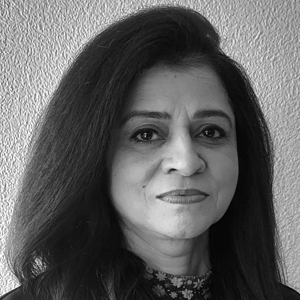
Rashmi Banga
1st SESSION – SPEAKER
Dr Rashmi Banga is the Chief of the UN Development Research Branch (DRB). She previously served as a senior economic affairs officer in UNCTAD and as an Adviser and Head of the Trade Division in the Commonwealth Secretariat. A winner of the Int. Economic Development Research Award from India Exim Bank, she has worked extensively on climate change, the digital revolution, South-South cooperation, industrial policy, and international trade.

Chee Yoke Ling
2nd SESSION – MODERATOR
& CLOSING SESSION
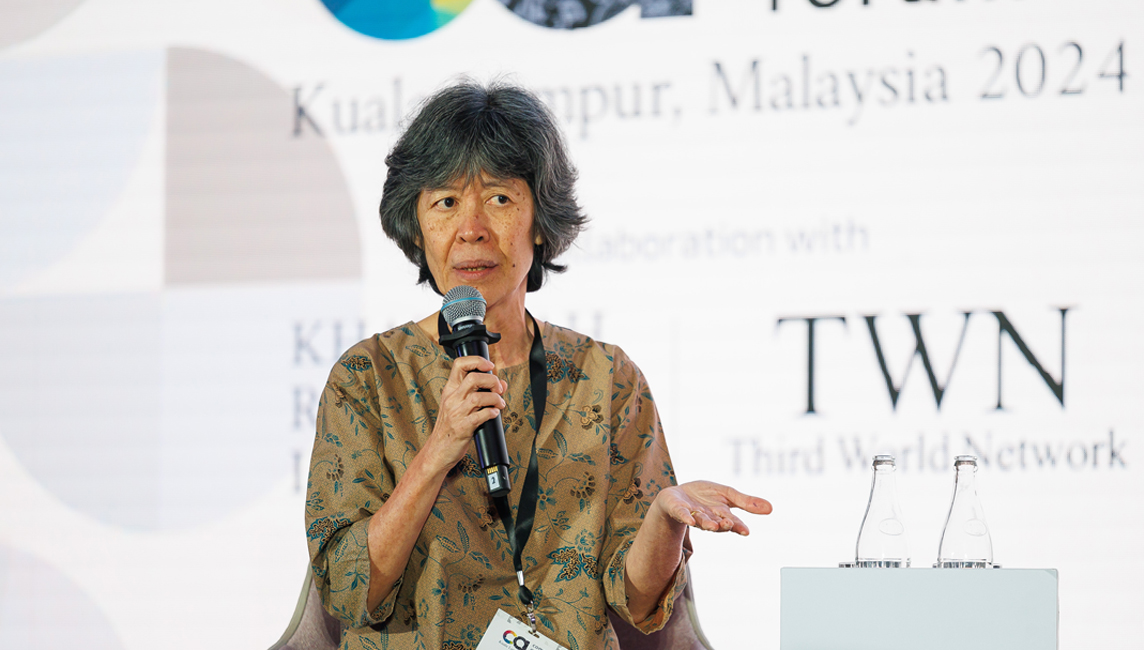
Chee Yoke Ling is the Executive Director of Third World Network (TWN). A lawyer by training, she has extensive experience engaging with civil society groups and developing country government policymakers on sustainable development issues, social justice and equity issues and the effects of globalisation on developing countries.
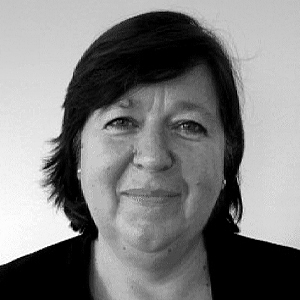
Ellen ‘t Hoen
2nd SESSION – SPEAKER
Ms Ellen ‘t Hoen is the director of Medicines Law & Policy (ML&P). She is the founder and former executive director of the Medicines Patent Pool and also a Global Health Law Fellow at the law faculty of the University of Groningen. She has published widely and is the author of several books. She is a Prix Prescrire laureate, and in 2020, she was appointed Officer of the Order of Oranje-Nassau for her work on access to medicines.

Sanjeev Krishna
2nd SESSION – SPEAKER
Dr Sanjeev Krishna teaches Molecular Parasitology at Medicine St George’s, University of London (SGUL). A Fellow of the British Fellow of the Academy of Medical Sciences, he is an honorary consultant physician in infectious disease and medicine at St George’s University Hospitals NHS Foundation Trust. He has been an advisor to multiple international bodies, including the World Health Organisation, as well as several biotech firms.

Vicente Paolo Yu
2nd SESSION – SPEAKER
Mr Vicente Paolo Yu has worked as an independent expert consultant for various UN agencies and NGOs. He is currently a Senior Legal Adviser at the Third World Network and a Visiting Research Fellow at the UN Research Institute for Social Development. His substantive policy work has focused on the right to development, international environmental law, development economics, and South-South cooperation.

Goh Chien Yen
3rd SESSION – MODERATOR
Goh Chien Yen is consultant on development finance with Third World Network (TWN). He was founder of Asia360 news, a regional current affairs newsmagazine and worked in DBS Bank as chief editor for its Group Research Department. He was also previously based in Geneva analysing international trade rules and policies for TWN.

Andrés Arauz
3rd SESSION – SPEAKER
Dr Andrés Arauz is an economist with extensive experience in economic regional integration, finance and technology. He served as Minister of Knowledge and Human Talent, Deputy Minister of Planning and General Director of Ecuador’s Central Bank. Leader of Movimiento Revolución Ciudadana, he was a candidate for the presidency of Ecuador in 2021 and a vice-presidential candidate in 2023. He was also the founder of the Dollarization Observatory.

Attiya Waris
3rd SESSION – SPEAKER
Dr Attiya Waris is the UN’s Independent Expert on foreign debt, other international financial obligations, and human rights. She is also a professor of Fiscal Law and Policy at the Faculty of Law at the University of Nairobi, Kenya. Much of her work has focused on developing and strengthening the linkages between finance and development through taxation, debt and illicit financial flows, and raising living standards.
Bhumika Muchhala
3rd SESSION – SPEAKER
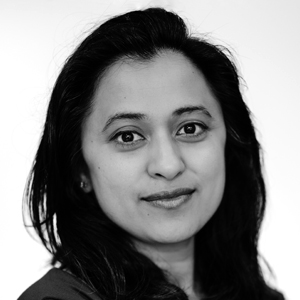
Dr Bhumika Muchhala is a senior advisor at the Third World Network and Lecturer in International Political Economy at The New School. Her policy work encompasses multilateral processes in the global economic governance of the United Nations, the role of the Bretton Woods Institutions in developing countries, and the right to development through financial architecture reform.

Richard Kozul-Wright
3rd SESSION – SPEAKER
Dr Richard Kozul-Wright is Professor of Sustainable Structural Transformation at SOAS, University of London. He worked for over 30 years at the UN, finishing as Director of UNCTAD’s Globalisation and Development Strategies Division and responsible for its Trade and Development Report. He has published widely on economic issues and most recently co-authored The Case for a New Bretton Woods (with Kevin Gallagher).

Rafael Heiber
CLOSING SESSION
Rafael Heiber is the Co-Founder and Deputy-Chairman of the Common Action Forum. Geographer and Climatologist with a MSc in Territorial Planning and a PhD in Sociology, he is Adjunct Professor of Social Structure and Political Theory at the Charles III University of Madrid.